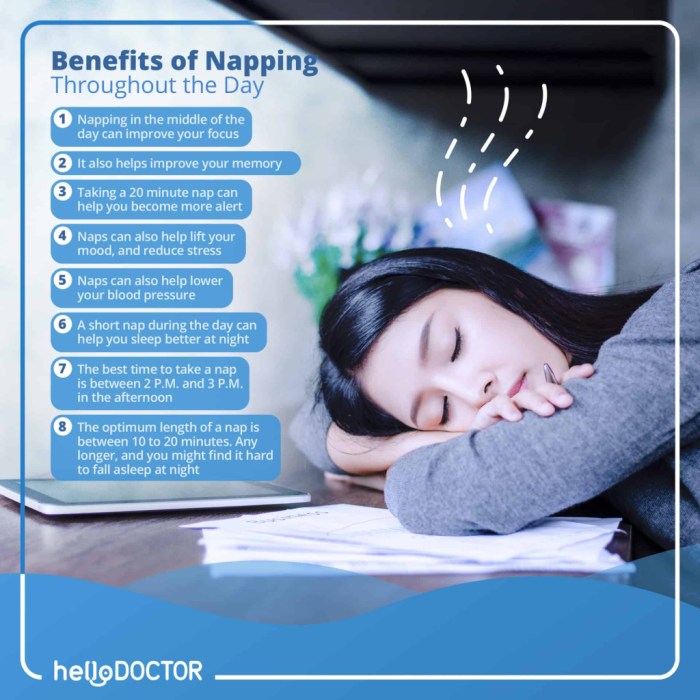
Benefits of napping for enhancing daytime alertness: Kicking off with the importance of napping for staying alert and focused during the day, this topic sheds light on how a quick snooze can significantly improve cognitive function and productivity.
Explore the connection between napping and mental wellness, physical fitness, hydration, exercise, and more to discover the key to optimal alertness.
Benefits of Napping for Enhancing Daytime Alertness
Napping is not just for children or the elderly; it can actually be a powerful tool for boosting daytime alertness in adults as well. When done correctly, napping can have a significant impact on productivity, focus, and overall cognitive function.
Boosting Alertness
Napping can help combat the natural dip in alertness that often occurs in the afternoon, known as the post-lunch slump. By taking a short nap during this time, you can recharge your brain and body, leading to increased alertness and improved performance for the rest of the day.
- Napping for just 20-30 minutes can provide a quick boost in alertness without leaving you feeling groggy or interfering with nighttime sleep.
- A short nap can also help improve reaction times, memory, and decision-making skills, making you more effective in your daily tasks.
Productivity and Focus
Taking a nap can actually enhance your productivity by allowing you to return to your work with renewed energy and focus. Instead of pushing through fatigue and decreased alertness, a nap can help you reset and tackle tasks with improved efficiency.
- Napping has been shown to improve mood and reduce feelings of fatigue, leading to a more positive and productive work environment.
- By boosting alertness and cognitive function, napping can help you stay on task and avoid distractions, ultimately leading to better performance.
Improved Cognitive Function
Regular napping has been linked to improved cognitive function, including better memory retention, increased creativity, and enhanced problem-solving abilities. By giving your brain a chance to rest and consolidate information, napping can help you perform at your best mentally.
- During sleep, the brain processes and stores new information, making napping an essential part of the learning and memory consolidation process.
- Napping has also been shown to enhance creativity by allowing the brain to make new connections and associations, leading to fresh ideas and innovative solutions.
Balanced Diet
Maintaining a balanced diet is crucial for overall well-being and alertness. The foods we consume play a significant role in our energy levels and ability to stay alert throughout the day.
Foods that Support Alertness and Energy Levels
- Leafy greens like spinach and kale are rich in iron, which helps transport oxygen to the brain and muscles, boosting alertness.
- Fatty fish such as salmon and tuna are high in omega-3 fatty acids, which support brain function and cognitive performance.
- Whole grains like oatmeal and quinoa provide a steady release of energy, keeping you alert and focused.
- Nuts and seeds are packed with healthy fats, protein, and fiber, providing a sustained source of energy.
Importance of Nutrient-Rich Foods
Eating a diet rich in nutrients is essential for enhancing daytime alertness. Nutrient-dense foods provide the necessary vitamins, minerals, and antioxidants that support brain function and energy levels. By fueling your body with the right nutrients, you can improve cognitive performance, concentration, and overall alertness.
Mental Wellness: Benefits Of Napping For Enhancing Daytime Alertness
Napping can have a significant impact on mental wellness, contributing to improved overall well-being and cognitive function. The connection between mental wellness and alertness is closely linked, as adequate rest and relaxation are essential for maintaining a healthy mind and body.
Benefits of Napping for Mental Wellness
- Napping can help reduce stress and anxiety levels, allowing for better emotional regulation and mental clarity.
- Improved mood and emotional stability can be achieved through regular naps, promoting a positive mindset and overall mental health.
- Enhanced cognitive function and memory consolidation are observed with napping, leading to better focus and productivity throughout the day.
- By allowing the brain to rest and recharge, naps can aid in problem-solving skills and creative thinking.
Physical Fitness
Maintaining physical fitness plays a crucial role in promoting alertness throughout the day. Regular exercise not only improves overall health but also enhances cognitive function and mental clarity. When combined with the benefits of napping, physical activity can further boost daytime alertness and productivity.
Exercise Complementing Napping for Daytime Alertness
Regular physical activity can complement the benefits of napping by increasing blood flow to the brain, promoting the release of endorphins, and reducing feelings of fatigue. Exercise helps in improving focus, memory, and overall cognitive function, which are essential for staying alert and attentive during the day.
- Cardiovascular exercises like running, cycling, or swimming are great for boosting alertness as they increase heart rate and oxygen flow to the brain.
- Strength training exercises such as weightlifting or bodyweight workouts can enhance alertness by improving muscle strength and endurance.
- Yoga and Pilates are effective in reducing stress and improving mental clarity, leading to better alertness throughout the day.
Adequate Hydration
Staying properly hydrated is crucial for maintaining alertness throughout the day. Dehydration can have a significant impact on cognitive function and overall alertness levels, affecting productivity and performance.
Importance of Hydration
Proper hydration is essential for optimal brain function. Dehydration can lead to decreased cognitive abilities, including poor concentration, memory issues, and slower reaction times. By staying hydrated, you can support your brain in performing at its best.
Tips for Maintaining Hydration
- Carry a reusable water bottle with you throughout the day to ensure easy access to water.
- Set reminders to drink water regularly, especially if you tend to forget to hydrate.
- Consume hydrating foods such as fruits and vegetables, in addition to drinking water.
- Avoid excessive consumption of dehydrating beverages like caffeinated drinks and alcohol.
- Monitor your urine color – clear or pale yellow urine indicates proper hydration.
Regular Exercise
Regular exercise plays a crucial role in improving daytime alertness. When we engage in physical activity, our body releases endorphins, which help boost our mood and energy levels. This, in turn, can enhance our cognitive function and overall alertness throughout the day.
Relationship between Physical Activity and Cognitive Function
Regular exercise has been shown to have a positive impact on cognitive function. Physical activity helps increase blood flow to the brain, promoting the growth of new brain cells and improving neural connections. This can lead to better memory, focus, and overall cognitive performance.
- Exercise stimulates the release of chemicals in the brain that support cognitive function, such as dopamine and serotonin.
- Physical activity has been linked to improved decision-making skills and faster processing speed.
- Regular exercise can reduce the risk of cognitive decline and may help prevent conditions like dementia and Alzheimer’s disease.
Benefits of Combining Exercise with Napping for Optimal Alertness
Combining exercise with napping can further enhance daytime alertness. Napping after a workout can help the body recover and recharge, allowing you to feel refreshed and more alert when you wake up. This combination can provide a double boost to your energy levels and cognitive function, making you more productive and focused throughout the day.
Remember to stay hydrated and maintain a balanced diet to support your exercise routine and maximize the benefits of both physical activity and napping.
Healthy Lifestyle
Adopting a healthy lifestyle is crucial for supporting daytime alertness and overall well-being. By incorporating healthy habits into your daily routine, you can enhance your alertness levels and maintain a balanced state of mind and body.
Creating a Balanced Routine
Creating a balanced routine involves a combination of healthy habits that promote mental and physical wellness. By following a structured schedule and incorporating the following practices, you can optimize your alertness throughout the day:
- Getting an adequate amount of sleep each night to ensure proper rest and rejuvenation.
- Eating a nutritious and well-balanced diet rich in fruits, vegetables, whole grains, and lean proteins.
- Engaging in regular physical exercise to boost energy levels and improve overall fitness.
- Staying hydrated by drinking plenty of water throughout the day to support cognitive function.
- Practicing mindfulness and stress-reducing techniques to promote mental clarity and focus.
Examples of Healthy Habits
There are various healthy habits that you can incorporate into your lifestyle to enhance alertness and promote overall well-being. Some examples include:
- Establishing a consistent sleep schedule and creating a restful sleep environment.
- Taking short breaks throughout the day to refresh your mind and prevent burnout.
- Incorporating relaxation techniques such as deep breathing exercises or meditation into your daily routine.
- Avoiding excessive caffeine consumption and opting for natural energy-boosting foods instead.
- Socializing with friends and engaging in activities that bring you joy and fulfillment.
Nutrient-Rich
Consuming a diet rich in nutrients is crucial for maintaining optimal alertness throughout the day. Nutrient-rich foods provide the body with essential vitamins and minerals that support cognitive function and overall brain health.
Impact of Vitamins and Minerals on Cognitive Function
Vitamins and minerals play a key role in cognitive function, affecting memory, focus, and alertness. For example, vitamin B12 is essential for nerve function and cognitive processes, while iron helps transport oxygen to the brain, enhancing alertness and mental clarity.
Examples of Nutrient-Rich Foods
- Leafy greens like spinach and kale are rich in vitamins A, C, and K, as well as minerals like iron and calcium, which support brain function.
- Fatty fish such as salmon and mackerel are high in omega-3 fatty acids, which have been linked to improved cognitive function and reduced risk of cognitive decline.
- Nuts and seeds like almonds and chia seeds are packed with nutrients like vitamin E, magnesium, and zinc, which can enhance memory and cognitive performance.
- Berries such as blueberries and strawberries are rich in antioxidants that help protect brain cells from damage and improve communication between brain cells.
Stress Management
Stress management plays a crucial role in improving alertness and cognitive performance throughout the day. By effectively managing stress, individuals can enhance their overall well-being and mental clarity.
Techniques for Stress Management
- Practice mindfulness and meditation to calm the mind and reduce stress levels.
- Engage in deep breathing exercises to promote relaxation and alleviate tension.
- Regular physical activity, such as yoga or tai chi, can help release built-up stress and boost alertness.
- Establish a healthy work-life balance to prevent burnout and reduce stressors in daily life.
Link Between Stress and Cognitive Performance
Stress has a direct impact on cognitive function, with high stress levels impairing memory, focus, and decision-making abilities. By managing stress effectively, individuals can maintain optimal cognitive performance and stay alert throughout the day.
Incorporating Stress-Relief Practices for Alertness
- Take short breaks during the day to relax and recharge, reducing stress and improving alertness.
- Develop a consistent sleep routine to ensure adequate rest and minimize stress-induced fatigue.
- Connect with friends and family for emotional support and stress relief, fostering a sense of well-being and alertness.
- Engage in hobbies or activities that bring joy and relaxation, helping to combat stress and enhance alertness.
Preventive Care
Preventive care plays a crucial role in maintaining daytime alertness by identifying and addressing potential health issues before they escalate.
Regular Check-Ups and Screenings
Regular check-ups and screenings are essential for overall well-being as they help in early detection of any health concerns. By staying proactive and getting routine tests done, individuals can ensure that any underlying conditions that may affect alertness are identified and managed promptly.
Importance of Preventive Measures
Implementing preventive measures is key for cognitive function and alertness. By adopting a healthy lifestyle, including a balanced diet, regular exercise, and stress management techniques, individuals can reduce the risk of developing conditions that may impact alertness. Additionally, staying hydrated, getting enough sleep, and managing mental wellness are crucial components of preventive care that contribute to maintaining optimal daytime alertness.
Proper Nutrition
Proper nutrition plays a critical role in maintaining daytime alertness and cognitive performance. A balanced diet not only fuels our bodies but also supports optimal brain function, helping us stay sharp and focused throughout the day.
Connection Between Proper Nutrition and Daytime Alertness
A well-rounded diet rich in essential nutrients like vitamins, minerals, protein, and healthy fats can significantly impact our alertness levels. Nutrient-dense foods provide the necessary energy for our brains to function efficiently, improving cognitive abilities and overall mental clarity.
Impact of Balanced Meals on Cognitive Performance
Balanced meals that include a variety of food groups such as fruits, vegetables, whole grains, lean proteins, and healthy fats can enhance cognitive performance. These foods help regulate blood sugar levels, improve concentration, and boost memory retention, ultimately contributing to increased alertness and productivity.
Tips on Planning Meals to Support Optimal Alertness
- Start your day with a nutritious breakfast containing a mix of carbohydrates, protein, and fiber to kickstart your metabolism and maintain steady energy levels.
- Incorporate snacks like nuts, fruits, or yogurt between meals to prevent energy crashes and sustain focus.
- Include colorful fruits and vegetables in your meals to benefit from a range of antioxidants that protect brain cells and support cognitive function.
- Stay hydrated by drinking plenty of water throughout the day, as dehydration can negatively impact alertness and mental performance.
- Limit processed foods high in sugar and unhealthy fats, as they can lead to energy spikes and crashes that affect alertness.
Quality Sleep
Quality sleep plays a crucial role in enhancing daytime alertness. When we get a good night’s rest, our cognitive function improves, allowing us to stay focused, alert, and productive throughout the day.
Importance of a Good Night’s Rest for Cognitive Function
A good night’s sleep is essential for optimal brain function. During sleep, our brain processes information, consolidates memories, and rejuvenates, leading to improved cognitive abilities such as problem-solving, decision-making, and creativity.
Tips for Improving Sleep Quality for Enhanced Alertness
- Avoid caffeine and electronic devices before bedtime to promote relaxation.
- Establish a consistent sleep schedule to regulate your body’s internal clock.
- Create a comfortable sleep environment with a supportive mattress and pillows.
- Practice relaxation techniques such as deep breathing or meditation to reduce stress and promote sleep.
- Avoid heavy meals and vigorous exercise close to bedtime to allow your body to wind down.
Cardio Health
Regular cardio exercise plays a crucial role in maintaining cardiovascular health, which in turn can significantly impact daytime alertness. By improving blood flow and oxygen delivery throughout the body, cardio activities help enhance cognitive function and support mental clarity.
Benefits of Cardio Exercises for Cognitive Performance
- Increased oxygen flow to the brain, promoting better focus and alertness.
- Stimulates the release of endorphins, reducing stress and enhancing mood.
- Improves overall cardiovascular health, reducing the risk of conditions that can impact cognitive function.
Examples of Cardio Activities to Boost Alertness
- Running or jogging
- Cycling
- Swimming
- Aerobics classes
- Dancing
Immune Boost
Having a strong immune system plays a crucial role in supporting daytime alertness. When our immune system is functioning well, it helps reduce the likelihood of falling ill, which can disrupt our sleep patterns and overall cognitive function.
Relationship between Immunity and Cognitive Function
Our immune system and cognitive function are closely linked. Research has shown that inflammation in the body due to a weakened immune system can have negative effects on brain health, leading to issues with memory, focus, and overall alertness.
Tips for Boosting Immunity for Enhanced Alertness
- Include immune-boosting foods in your diet, such as fruits, vegetables, nuts, and seeds.
- Get regular exercise to help strengthen your immune system and improve overall health.
- Stay hydrated throughout the day to support immune function.
- Manage stress levels through relaxation techniques like meditation or yoga.
- Ensure you are getting enough quality sleep to allow your immune system to recharge and function optimally.
Positive Mindset
Having a positive mindset can significantly improve alertness during the day. Optimism plays a crucial role in cognitive performance, influencing how we perceive and react to various situations. Cultivating a positive outlook can lead to increased focus, productivity, and overall well-being.
Impact on Cognitive Performance
A positive mindset has a direct impact on cognitive performance. When individuals approach tasks with optimism and a can-do attitude, they are more likely to problem-solve effectively, make better decisions, and retain information. Positive thinking can also reduce stress levels, which in turn can enhance cognitive function and alertness.
Techniques for Cultivating a Positive Mindset
- Acknowledge and challenge negative thoughts: Recognize when negative thoughts arise and actively challenge them with positive affirmations or reframing techniques.
- Practice gratitude: Regularly express gratitude for the good things in your life, shifting your focus from what’s lacking to what you appreciate.
- Engage in mindfulness and meditation: These practices can help quiet the mind, reduce stress, and promote a positive outlook on life.
- Surround yourself with positivity: Spend time with supportive and uplifting individuals, engage in activities that bring you joy, and consume content that inspires and motivates you.
- Set realistic goals: Setting achievable goals and celebrating small victories can boost confidence and foster a positive mindset.
Clean Eating
Eating clean plays a crucial role in maintaining daytime alertness and overall well-being. By focusing on whole, unprocessed foods, individuals can benefit from improved cognitive function and sustained energy levels throughout the day.
Benefits of Clean Eating for Daytime Alertness
Clean eating involves consuming nutrient-dense foods such as fruits, vegetables, whole grains, lean proteins, and healthy fats. These foods provide essential vitamins, minerals, and antioxidants that support brain function and mental clarity, leading to enhanced daytime alertness.
Impact of Processed Foods on Cognitive Function
Processed foods, high in added sugars, unhealthy fats, and artificial ingredients, can have a negative impact on cognitive function. These foods may result in energy crashes, brain fog, and decreased focus, hindering daytime alertness and overall productivity.
Tips for Adopting a Clean Eating Lifestyle for Optimal Alertness
- Aim to fill your plate with a variety of colorful fruits and vegetables to ensure a diverse range of nutrients that support brain health.
- Choose whole grains such as brown rice, quinoa, and oats over refined grains like white bread and pasta for sustained energy levels.
- Incorporate lean proteins like chicken, fish, tofu, or legumes into your meals to support muscle function and mental alertness.
- Opt for healthy fats from sources like avocados, nuts, seeds, and olive oil to nourish your brain and improve cognitive function.
- Avoid or limit processed foods, sugary beverages, and excessive caffeine intake, as they can disrupt energy levels and cognitive performance.
Daily Activity
Regular daily activity plays a crucial role in maintaining alertness throughout the day. Engaging in physical and mental activities can help keep the mind sharp and focused, leading to improved cognitive function and overall well-being.
Importance of Daily Activity
Staying active throughout the day is essential for enhancing alertness and productivity. Daily activity helps increase blood flow to the brain, delivering oxygen and nutrients that are vital for optimal brain function. It also promotes the release of endorphins, which can boost mood and energy levels.
Benefits of Staying Active
- Improves cognitive function and mental clarity
- Enhances focus and concentration
- Boosts energy levels and reduces feelings of fatigue
- Helps manage stress and improve overall mood
- Promotes better sleep quality and overall well-being
Examples of Daily Activities
There are various activities that can help enhance cognitive function and maintain alertness throughout the day:
- Regular exercise such as brisk walking, jogging, or yoga
- Mental exercises like puzzles, crosswords, or learning a new skill
- Breaks from prolonged sitting or screen time with short walks or stretching
- Engaging in hobbies or activities that bring joy and relaxation
Holistic Health
Achieving optimal daytime alertness goes beyond just taking naps or following a balanced diet. A holistic approach to health considers the interconnectedness of physical, mental, and emotional well-being, leading to improved overall alertness.
Importance of Holistic Health
A holistic approach to health involves taking care of your physical, mental, and emotional well-being collectively. This integrated approach can significantly impact your daytime alertness and overall quality of life.
- Engage in regular physical activity to boost energy levels and improve focus.
- Practice mindfulness techniques such as meditation to reduce stress and enhance mental clarity.
- Cultivate positive relationships and social connections to support emotional well-being.
Mindful Living
Practicing mindfulness can significantly enhance alertness during the day by promoting focused attention and awareness of the present moment.
Benefits of Mindful Living
- Improved Concentration: Mindfulness helps in training the mind to concentrate on tasks at hand, leading to better focus and productivity.
- Reduced Stress: Being present and mindful in daily activities can lower stress levels, improving overall mental well-being and alertness.
- Enhanced Problem-Solving Skills: Mindfulness practices enable individuals to approach challenges with a clear and calm mind, enhancing problem-solving abilities.
- Increased Energy Levels: By staying mindful and present, individuals can maintain high energy levels throughout the day, contributing to improved alertness.
Emotional Balance
Maintaining emotional balance is crucial for enhancing daytime alertness. Our emotions play a significant role in influencing cognitive function, productivity, and overall well-being. When we are emotionally stable, we are better equipped to focus, make decisions, and handle stress effectively, leading to improved alertness throughout the day.
Impact of Emotions on Cognitive Function and Productivity
Emotions have a direct impact on our cognitive function and productivity. Negative emotions such as stress, anxiety, or anger can cloud our judgment, impair decision-making abilities, and hinder productivity. On the other hand, positive emotions like joy, gratitude, and contentment can enhance cognitive function, boost creativity, and increase productivity levels.
- Positive emotions can improve memory retention and learning abilities.
- Negative emotions can lead to decreased focus and attention span.
- Emotional balance is essential for maintaining mental clarity and sharpness.
Tips for Maintaining Emotional Equilibrium for Enhanced Alertness
Achieving emotional balance requires conscious effort and practice. Here are some tips to help maintain emotional equilibrium for enhanced alertness:
- Practice mindfulness and meditation to stay present and manage emotions effectively.
- Engage in activities that bring you joy and relaxation, such as hobbies or spending time with loved ones.
- Get regular exercise to release endorphins and reduce stress levels.
- Ensure adequate rest and quality sleep to regulate emotions and recharge the mind.
- Seek support from friends, family, or a mental health professional when needed.
Health Education
Health education plays a crucial role in promoting daytime alertness by providing individuals with knowledge and understanding of various health-related factors that can impact their overall well-being.
Role of Health Education in Promoting Daytime Alertness
Health education equips individuals with the necessary information to make informed decisions about their lifestyle choices, including sleep patterns, nutrition, exercise, and stress management. By understanding the importance of quality sleep, balanced diet, regular physical activity, and stress reduction techniques, individuals can optimize their daytime alertness levels.
Importance of Understanding Health-Related Information, Benefits of napping for enhancing daytime alertness
- Understanding health-related information empowers individuals to take control of their health and well-being.
- It allows individuals to make proactive choices that can prevent health issues and improve overall quality of life.
- Knowledge about health topics enables individuals to recognize signs of fatigue, stress, or other factors affecting alertness and take appropriate measures to address them.
Resources for Learning About Health Topics that Impact Alertness
- Consulting reputable health websites and online platforms for articles, videos, and resources on sleep hygiene, nutrition, exercise, and stress management.
- Attending workshops, seminars, or webinars conducted by health professionals to gain deeper insights into optimizing alertness through lifestyle choices.
- Engaging with healthcare providers, nutritionists, fitness trainers, and mental health professionals for personalized guidance on improving alertness and overall health.
Self-Care
Taking care of oneself plays a crucial role in maintaining overall well-being and supporting daytime alertness. Prioritizing self-care practices can significantly enhance cognitive function and help improve alertness throughout the day.
Self-Care Strategies to Enhance Alertness
- Establishing a consistent sleep routine: Getting an adequate amount of sleep each night is essential for optimal alertness during the day. Maintaining a regular sleep schedule can help regulate your body’s internal clock and improve overall alertness.
- Engaging in relaxation techniques: Practices such as deep breathing exercises, meditation, or yoga can help reduce stress levels and promote mental clarity, leading to improved alertness.
- Physical activity: Regular exercise not only boosts physical fitness but also enhances cognitive function and alertness. Incorporating physical activity into your daily routine can help increase energy levels and improve focus.
- Healthy nutrition: Consuming a well-balanced diet rich in nutrients can provide your body and brain with the fuel they need to function optimally. Foods high in antioxidants, such as fruits and vegetables, can help support brain health and enhance alertness.
- Setting boundaries: Establishing boundaries and learning to say no when necessary can prevent burnout and promote mental well-being. Prioritizing self-care by taking breaks when needed can help recharge your energy levels and improve alertness.
Chronic Disease
Chronic diseases can have a significant impact on daytime alertness. Conditions such as diabetes, heart disease, arthritis, and asthma can cause symptoms like pain, fatigue, and difficulty breathing, all of which can interfere with cognitive function and make it challenging to stay alert during the day.
Impact of Chronic Diseases on Daytime Alertness
- Chronic pain: Constant pain can disrupt sleep patterns and lead to daytime drowsiness, affecting alertness.
- Fatigue: Chronic fatigue from conditions like fibromyalgia or multiple sclerosis can make it hard to concentrate and stay awake.
- Medication side effects: Many medications for chronic diseases have drowsiness as a side effect, further impacting alertness.
Managing Chronic Conditions for Cognitive Function
- Regular check-ups: Monitoring and managing chronic conditions through regular medical appointments can help optimize cognitive function.
- Medication adherence: Following prescribed treatment plans can reduce symptoms that affect alertness.
- Healthy lifestyle: Maintaining a balanced diet, exercising regularly, and managing stress can improve overall health and cognitive function.
Tips for Navigating Alertness Challenges with Chronic Diseases
- Establish a sleep routine: Consistent sleep patterns can help manage fatigue and improve alertness.
- Stay hydrated: Dehydration can exacerbate symptoms of chronic conditions, impacting alertness.
- Take short naps: Brief naps can provide a quick energy boost to combat daytime drowsiness.
Outcome Summary
In conclusion, embracing the benefits of napping for enhancing daytime alertness can lead to a healthier and more energized lifestyle. By incorporating naps into your routine and focusing on overall well-being, you can unlock the full potential of your alertness and cognitive function.
User Queries
How long should a nap be to enhance daytime alertness?
A nap of around 20-30 minutes is ideal to avoid grogginess and boost alertness.
Can napping replace a good night’s sleep?
No, napping is beneficial for a quick energy boost but cannot substitute for a full night of quality sleep.
Are there specific times during the day when napping is most effective?
Early afternoon, around 1-3 pm, is generally considered the best time for a nap to enhance alertness.